
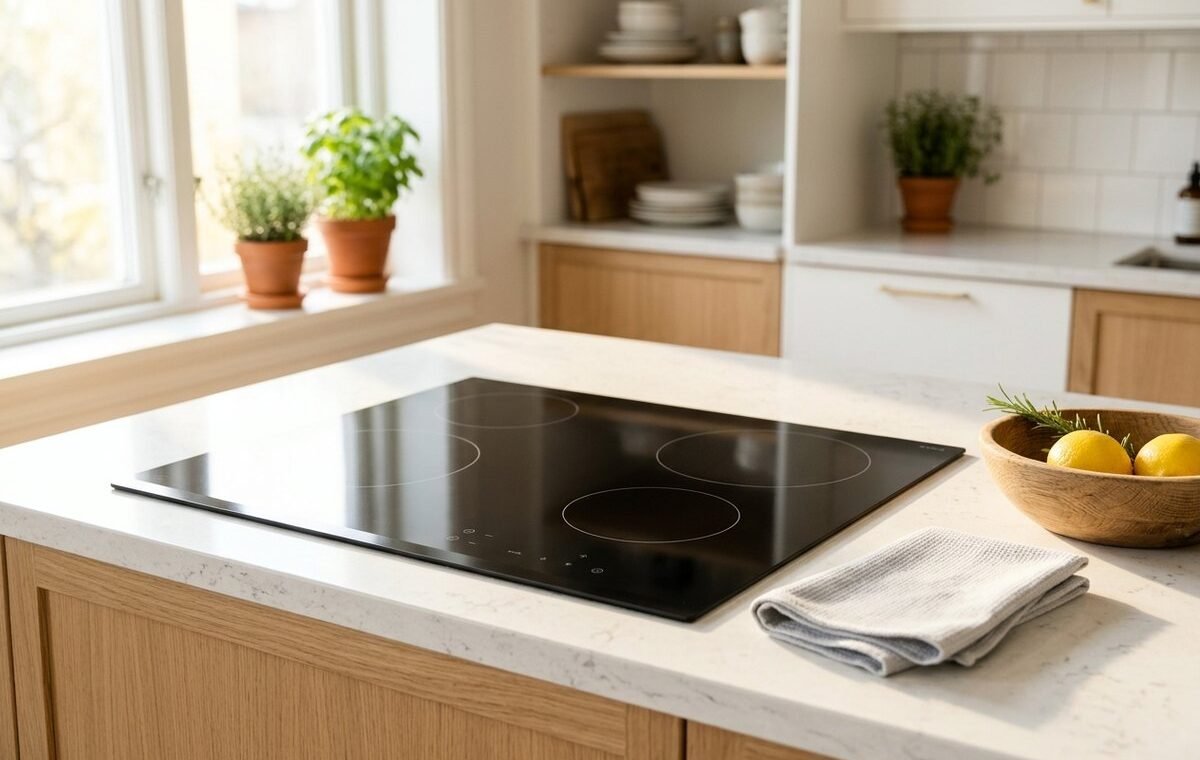
A boiled-over pot of pasta water or a stray drop of caramel sauce hits a hot glass stove top fast. Within thirty seconds, it bakes into a dark, crusty ring that laughs at dish soap.
Ceramic-glass cooktops look fragile, yet they handle thorough cleaning surprisingly well. The trick is matching your method to the type of mess and keeping the surface lubricated while scraping.
Wait until the glass cools completely. Lay a hot, soapy wet cloth over the burnt food for 15 minutes to soften the crust. Then, shave it off at a flat 30-to-45-degree angle using a fresh razor scraper on wet glass. Finally, polish away white mineral rings with cooktop cream or baking soda and a dry microfiber cloth.
Why Burnt Sugar and Starch Act Differently From Grease
Not every cooktop mess responds to the same cleaner. That is why people often scrub for twenty minutes without touching the stain.
Cooking oils bake into a sticky amber film when heated repeatedly. Alkaline pastes like baking soda break that oil film down cleanly.
Melted sugar, jam, and starchy boil-overs are different. Once burned, sugar bonds tightly into microscopic glass pores. In that case, softening the crust with water and shaving it with a sharp blade works better than hard scrubbing.
If sugar syrup or a plastic bread wrapper melts onto a scorching burner, do not wait for it to cool completely. Put on thick oven mitts right away. Scrape the soft puddle off immediately with a metal spatula or long-handled razor scraper toward a cool edge. Hardened sugar can pit the glass as it shrinks.
What You Need Before You Start
Gather your tools before wetting the stove. That way, you are not hunting under the sink with soapy hands:
- A single-edge razor blade scraper with a fresh, rust-free steel blade
- Liquid ceramic cooktop cleaner or powdered Bar Keepers Friend
- Baking soda and mild dish soap for a homemade paste
- Two clean microfiber cloths (one damp, one bone-dry for buffing)
- A non-scratch scrub sponge (blue or white—never green heavy-duty pads)
Step 1: Let the Glass Cool and Wipe Loose Crumbs
Press the back of your hand an inch above the burner ring before touching it. Residual heat turns water to steam right away and dries pastes before they work. Worse, heat can bake mild cleaner into chalky white streaks.
Once the stove is cool, sweep away loose salt grains and crumbs with a dry cloth. Dragging stray salt crystals across glass under a sponge quickly leaves hairline scratches.

Step 2: Soften the Crust With Soapy Heat or Baking Soda
Squirt a few drops of dish soap across the burnt spots. Lay a hot, wrung-out wet dish towel directly over the mess for 15 minutes. That trapped steam swells dried starch and softens the crust.
Is the stain mostly baked grease instead of solid carbon? Mix 3 tablespoons of baking soda with warm water to make a thick paste. Spread it over the rings and wait 15 minutes before wiping.
Step 3: Shave Off Burnt Crust With a Razor Scraper
This step scares people who have never tried it. Yet appliance makers include plastic-handled razor scrapers with new cooktops for good reason. Tempered glass-ceramic is harder than steel—as long as the blade is fresh and the glass stays wet.
- Drip soapy water onto the burnt crust so the glass stays slippery.
- Hold the single-edge razor scraper at a flat 30-to-45-degree angle against the glass.
- Push forward in short, controlled strokes. Never dig blade corners into the glass or saw sideways.
- Wipe shaved carbon off the blade onto a paper towel after every few passes.
Run a fingernail gently across a brand-new blade before starting. Even one tiny nick in the steel edge can score glass. Swap blades out as soon as they feel rough or show a speck of rust.
Step 4: Polish Away Metallic Marks and Rainbow Haze
Sometimes dull gray rings stay behind after the crust disappears. These marks come from aluminum or copper pots rubbing against the surface, along with faint rainbow oil smears.
Apply a quarter-sized swirl of liquid cooktop cleaner across the cool surface. Alternatively, make a thin slurry using water and Bar Keepers Friend oxalic-acid powder. Check your range brand, such as GE Appliances care manuals, if your glass has special matte coatings.
Buff in gentle circles using a soft, non-scratch sponge for 60 seconds. Let the cleaner dry to a light haze if the label recommends it. Wipe everything clean with a damp cloth, then buff right away with your dry microfiber cloth for a clear reflection.
Mistakes That Permanently Damage Glass Stove Tops
Do
- Keep the glass slick with soapy water while scraping
- Use blue non-scratch pads gently
- Lift heavy cast-iron pans instead of sliding them
Don't
- Use green Scotch-Brite pads or steel wool
- Scrape dry glass or tilt the razor past 45 degrees
- Spray oven cleaner onto a glass cooktop
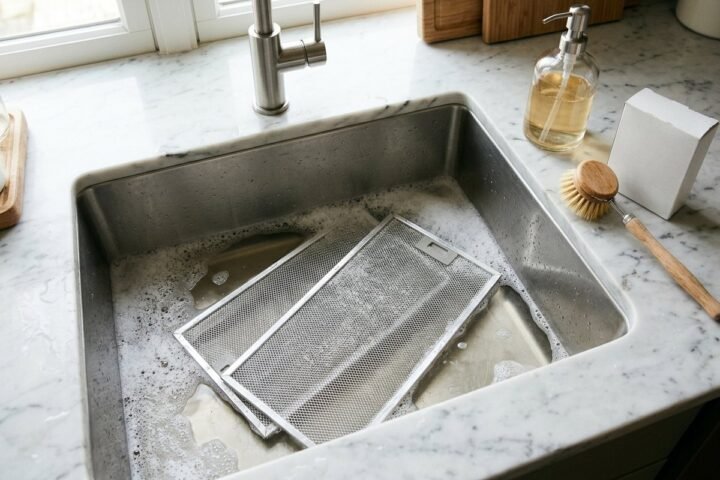
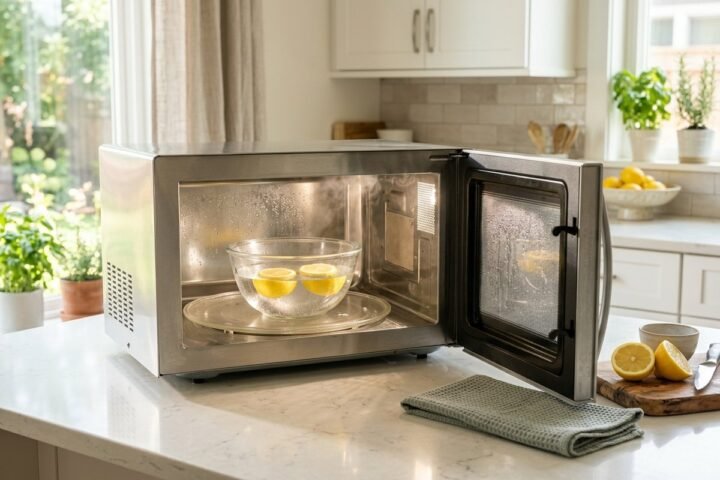
To clean greasy surfaces right above your burners, check our guide on cleaning range hood grease filters without ruining aluminum. You can also tackle splatters inside your oven-height microwave using our 5-minute lemon steam microwave guide.
Frequently Asked Questions
Can you use a Magic Eraser on a glass stove top?
Yes, a damp melamine foam sponge works well on light grease haze and water spots. However, it wears down fast on jagged carbon crusts. Test gently around white painted burner rings so you do not fade the markings.
Why does my glass stove top still have white rings after cleaning?
White or silvery rings inside the burner circle are usually mineral deposits or metal transfer from heavy pans. They are rarely leftover food. An oxalic-acid cleaner or ceramic cooktop polish removes those shadows much better than vinegar alone.
Is vinegar and baking soda safe on an induction cooktop?
Baking soda paste is mildly alkaline and safe on glass. Diluted white vinegar also clears final baking soda residue and water spots well. Just avoid pouring vinegar into edges where the glass meets stainless trim, since trapped acid dulls metal.